Early Intervention Prevents Bigger Problems Down the Line
This week’s case I want to share is one of an 18 year old riding pony who had been out on loan, but returned to it’s owner looking ill-thrifty and struggling to eat.
This one didn’t present any difficulty in diagnosing the problem; immediately upon opening it’s mouth, I could see two teeth that had split right down the middle. These teeth were one on either side and so the poor guy couldn’t even favour one side to save the pain when eating.
In these cases there is only one solution and that is to extract the affected teeth. This went without issue, and unusually in this case we elected to remove both at the same time – often we will do one side at once if there is a bilateral problem in order to leave a (reasonably) comfortable side to eat on. This chap however was already super painful on both sides anyway so there was no benefit in staging the removal.
The interesting consideration here however is why these teeth fractured in the first place, and leads us to explain a condition called infundibular hypoplasia-caries. A horse’s upper cheek teeth each contain two deep enamel cups in their centre that are filled with a softer dental tissue called cementum. In some cases during the development of the teeth, the inner cementum does not form properly, leaving a cavity; this is the “hypoplasia” part of the condition – hypoplasia translates to “under-formed”.
As the horse ages and the teeth wear, these cavities become exposed at the surface and so fill with food as the horse eats. This food remains trapped and ferments, with bacteria feeding on it and producing acid, which eats away at the dental tissues – this is the “caries” part of the condition.
There are two possible consequences to this:
1. The caries erodes into the pulp (the live nerves and vessels of the tooth), causing a pulpitis and tooth root infection.
2. The large cavity in the centre of the tooth is a weak point, along which the tooth splits under the normal forces of chewing.
The latter is what happened in this case.
Not too long ago, this disease was barely recognised and certainly never treated beyond removing the tooth. Now however, with increased understanding, skills and equipment, we are able to restore, or “fill” these cavities before fracture or infection occurs. Early identification and treatment of the infundibular hypoplasia-caries would have saved these teeth in this case, preserving the pony’s full dentition for years to come.
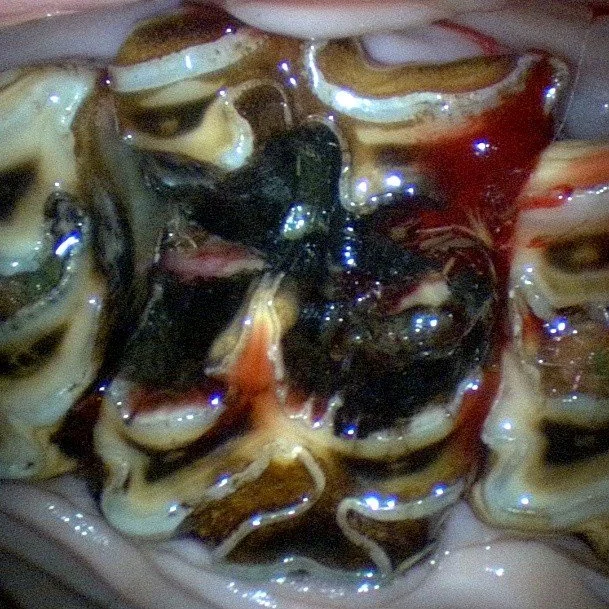
1a) Oral endoscopic view of fractured 108
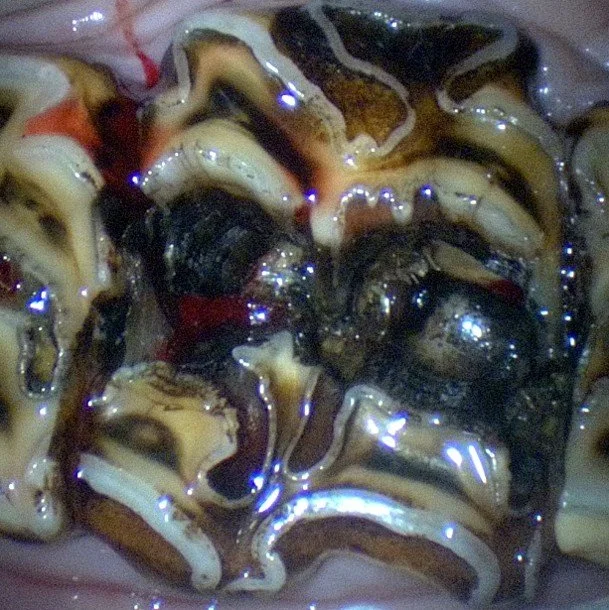
1b) Oral endoscopic view of fractured 208
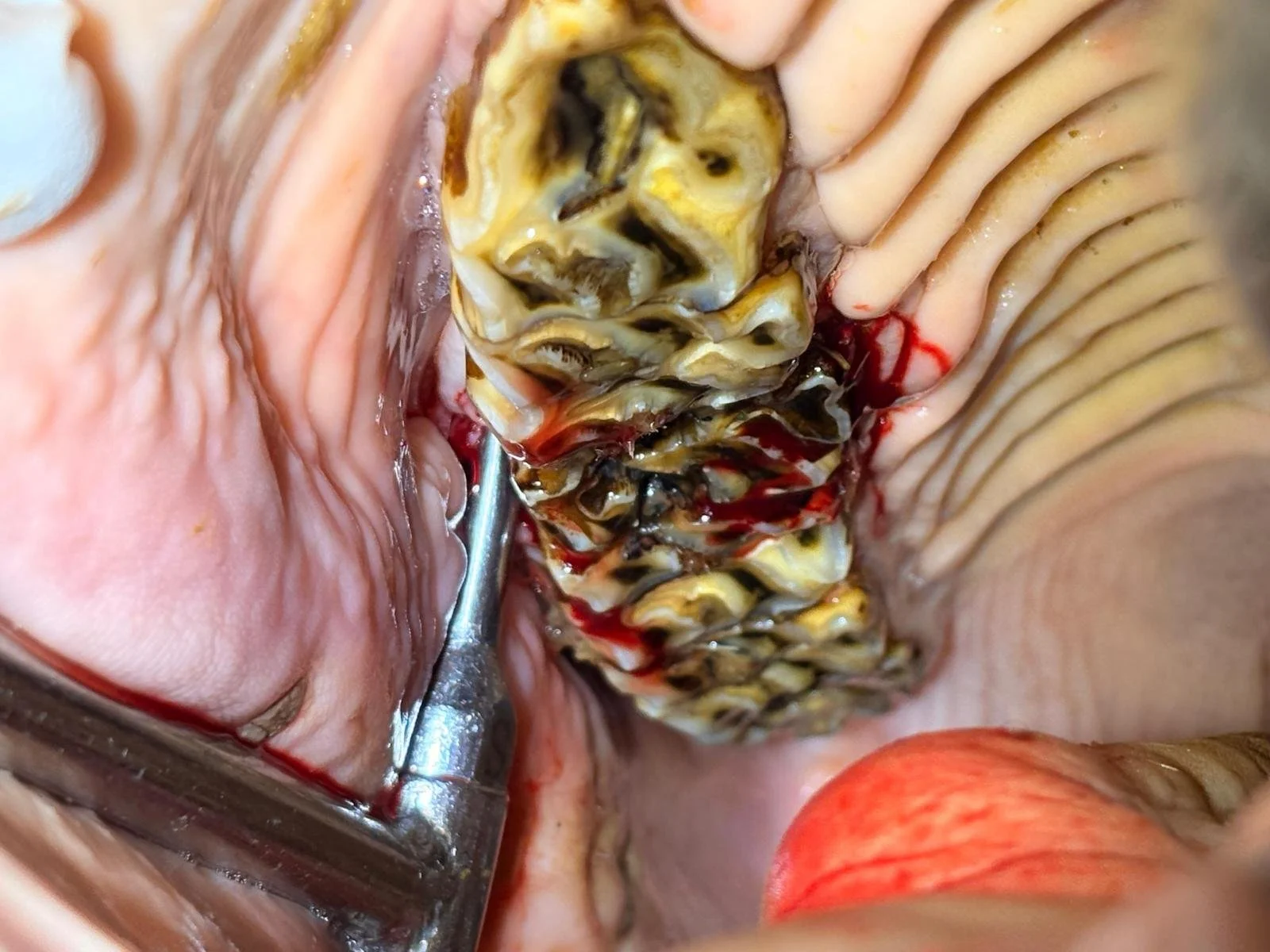
2a) The extraction process
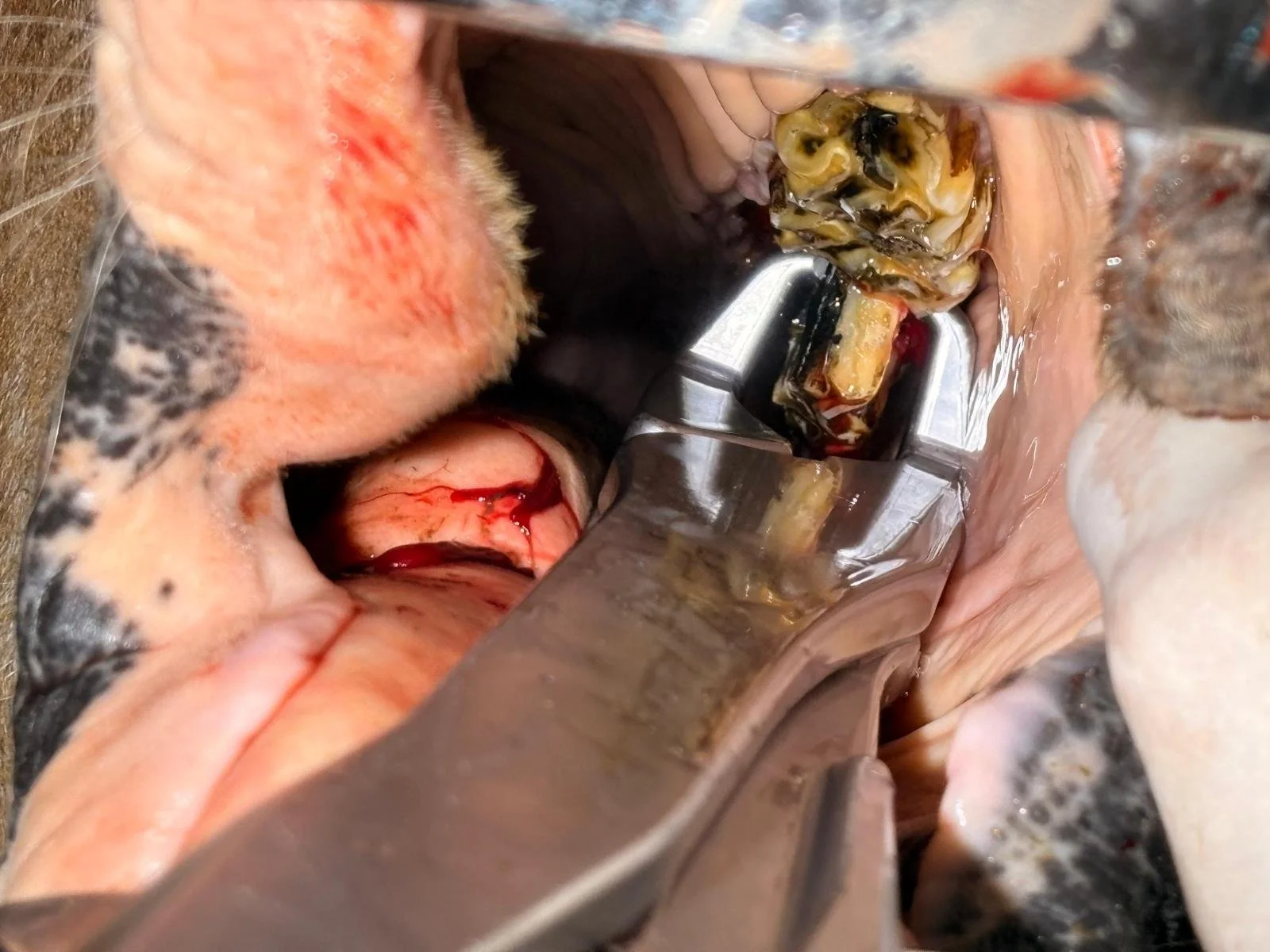
2b) The extraction process
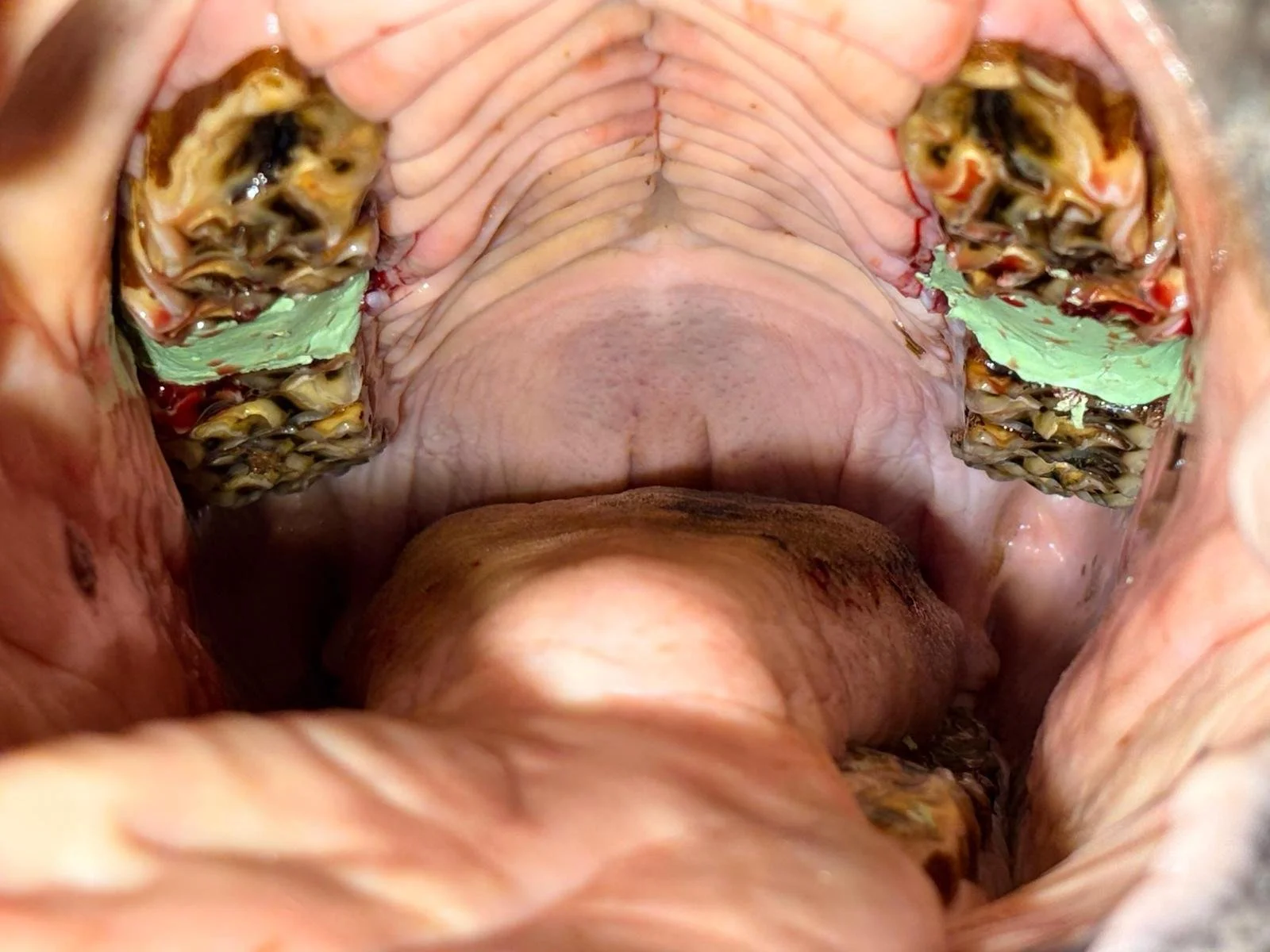
2c) The teeth removed
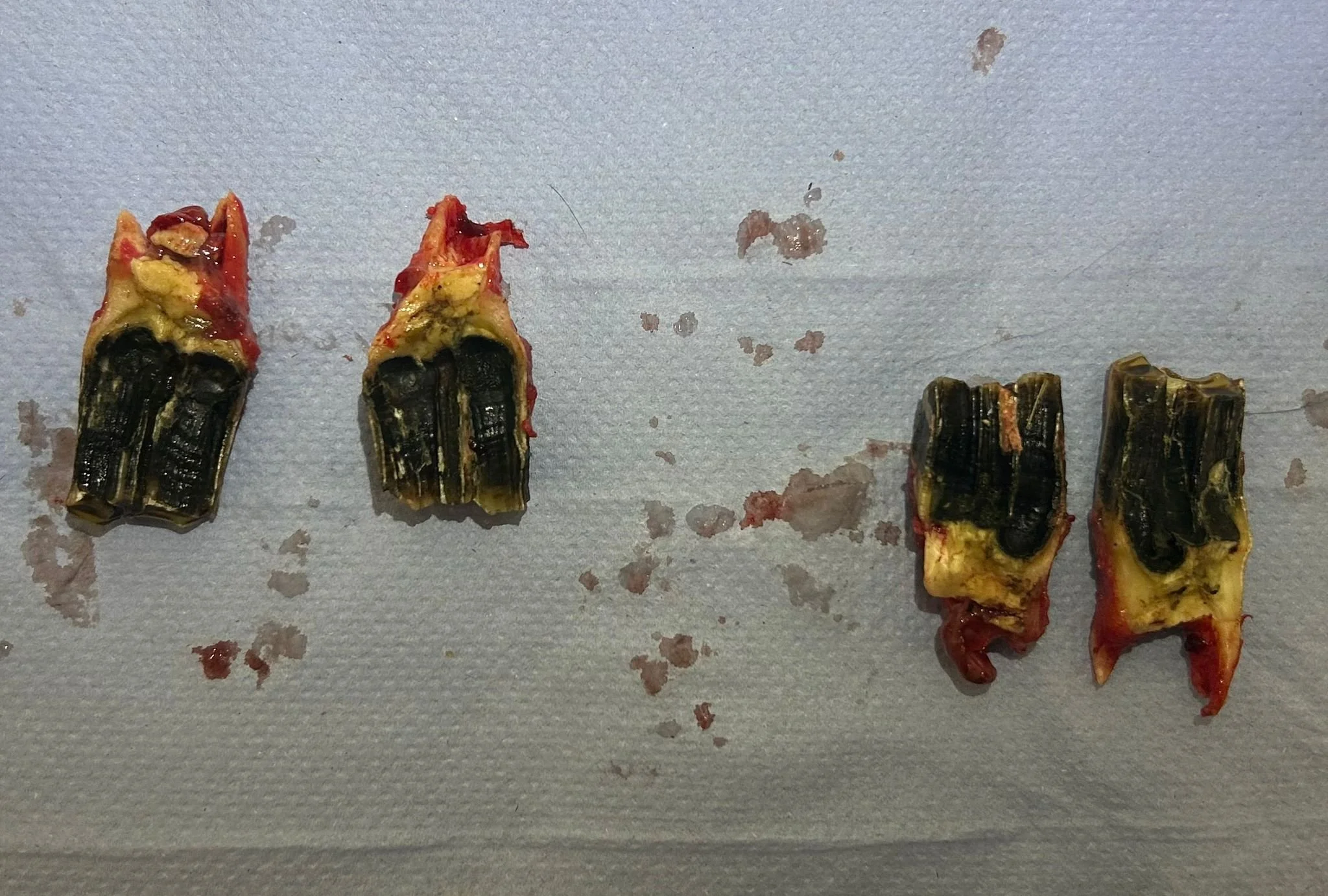
3) The extracted teeth
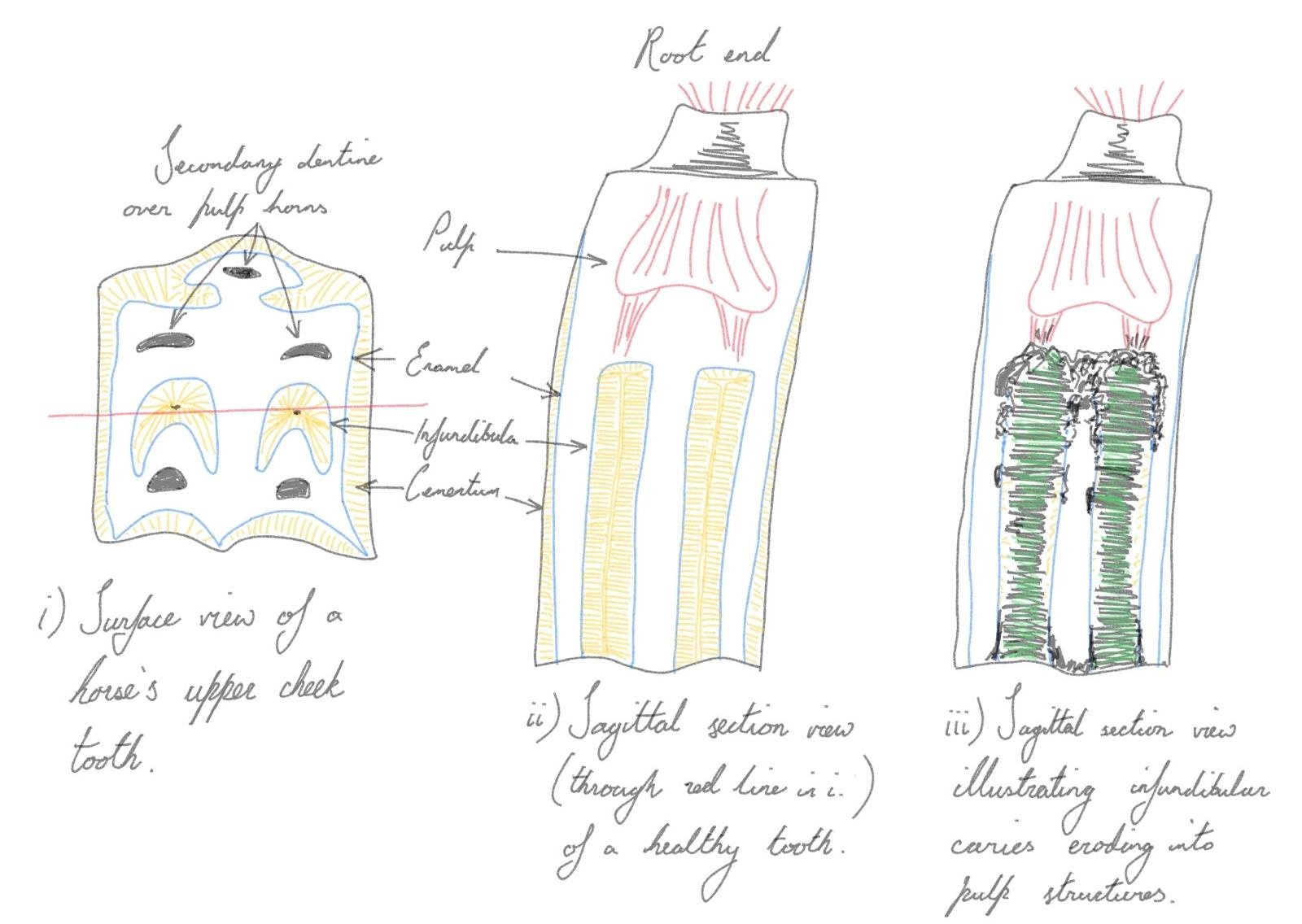
4) Illustrating the process
